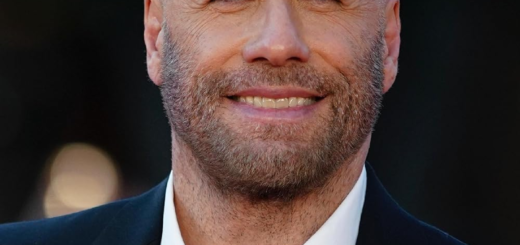
JON STEWART DROPS THE MIC ON LIVE TV — AND THE STUDIO GOES SILENT. DuKPI
The lights were hot.
The tension hotter.
Live television has a way of compressing moments—turning seconds into pressure chambers where posture, tone, and timing matter as much as words.
On this night, the studio felt especially tight.
After Karoline Leavitt finished a sharp jab about “washed-up voices lecturing America,” the host pivoted, almost reflexively, to Jon Stewart.
It was the kind of setup designed for sparks.
Stewart didn’t interrupt.
He didn’t laugh it off.
He didn’t reach for irony.
Instead, he leaned down, reached under the desk, and unfolded a single sheet of paper.
“Well,” he said, evenly, “I love homework.”
The line landed softly—no punchline attached. Cameras tightened their focus. The host paused, unsure whether to move things along.
The audience sensed something different was happening and went still.
Stewart began to read. Briefly. Methodically.
Dates.
Roles.
Public records.
A résumé reduced to context. Not his alone—decades of work distilled into a simple timeline. No sarcasm. No rush.
No attempt to humiliate. Just facts, presented without decoration. The kind of facts that don’t argue, but accumulate.
The room froze.
This wasn’t the Stewart many expected—the satirist, the puncher-up, the master of the well-timed smirk.
This was something quieter and, in its own way, more disarming. He wasn’t defending himself. He wasn’t counterattacking.
He was reframing the moment.
When he finished, Stewart folded the paper, placed it neatly on the desk, and looked up.
The smile that sometimes preceded a joke was gone. His voice, when he spoke again, was steady.
“I’ve challenged presidents, parties, and power for years,” he said. “With facts. In public.
I’ve faced tougher critics in louder rooms—and I’m still here.”
No theatrics.
No escalation.
Just a statement of presence.
The effect was immediate and strange.
The jab that had opened the exchange suddenly felt smaller, thinner—like an echo without a source.
The studio, trained to expect noise, didn’t know how to process the quiet authority of someone refusing to play the expected role.
Live TV thrives on conflict. But it rarely knows what to do with composure.
The host cleared their throat and tried to transition, but the energy had shifted.
The conversation resumed, technically, yet the moment lingered.
You could feel it in the way the panel leaned back, in the slight delay before the next question, in the careful neutrality that followed.
Off-camera, producers later admitted they debated cutting away. They didn’t.
Something told them this was the kind of clip that wouldn’t need explanation.
They were right.
Within minutes of the broadcast ending, the segment was everywhere.
Not because Stewart had landed a viral zinger, but because he hadn’t.
Social feeds filled with the same observation, phrased a hundred different ways: He didn’t raise his voice—and somehow that made it louder.
Supporters praised the restraint. Critics argued he was posturing.
Others insisted it was overanalyzed, just another media moment inflated by algorithms.
Yet even skeptics replayed the clip, searching for what had made it feel so final.
It wasn’t the paper.
It wasn’t the line.
It was the refusal to escalate.
In a media culture addicted to volume, Stewart had chosen control. He didn’t deny criticism. He contextualized it.
He didn’t demand respect. He demonstrated self-possession.
And in doing so, he turned the spotlight away from insult and toward credibility.
That’s what unsettled the room.
Stewart’s career has always existed at an odd intersection—comedian and critic, entertainer and civic irritant.
For years, he used humor as a wedge to pry open conversations others avoided.
But moments like this suggested an evolution: less interested in winning exchanges than in resetting their terms.
The paper mattered because it represented preparation. Not a gotcha. Not a prop. Preparation. It said: I expected this.
I’m not rattled by it.
That message traveled fast.
Commentators debated whether the moment marked a shift in Stewart’s public persona.
Was this the sound of a man tired of the format?
Or someone who had mastered it so completely he no longer needed its tricks?
The answers varied, but the consensus was harder to escape: the response worked because it didn’t ask for permission.
By the next morning, headlines framed the exchange as a “mic drop.” Stewart never used that phrase.
He didn’t tweet about it. He didn’t clarify his intent. Silence, again, did the work.
In a landscape where attention is currency and outrage is incentive, the moment stood out for its lack of both.
No spike of anger. No victory lap. Just a quiet assertion of durability.
Live television moved on. It always does.
But for a few minutes, something different happened on air. A familiar script was interrupted—not by force, but by composure.
And in that interruption, viewers were reminded of a simple truth the medium often forgets:
Sometimes the most powerful response isn’t louder.
It’s steadier.